Clients often ask me, “What natural herbs can I use for my dog’s pain?”
When I talk with clients about pain management, one of the first things I want you to realize is that your dog does not have to live in discomfort. There are natural options that can support your dog safely and effectively, especially when used thoughtfully and early.
It is difficult to watch your dog slow down. You may notice hesitation when getting up, stiffness after rest, or even a yelp when jumping off the couch. These changes are common as your dog ages, but they are not something you have to ignore.
In my experience, many dogs dealing with mild to moderate discomfort can benefit from targeted herbal and nutritional support. There is growing research showing that certain natural ingredients can help reduce inflammation, support joint health, and improve overall mobility, all without the same level of side effects we sometimes see with long-term medication use.
From an integrative perspective, I often recommend starting with daily support when your dog shows early signs of stiffness or soreness. Supporting the body early can help slow progression and keep your dog active longer.
The key is choosing the right combination for your dog’s specific needs. Not every dog responds the same way, which is why a personalized approach matters.
My goal is always to help your dog stay comfortable, active, and engaged in daily life. When you support your dog naturally and proactively, you give them the opportunity to move better, feel better, and truly enjoy their day-to-day life.
Which Natural Herbs Provide Comfort for Aging Pets?
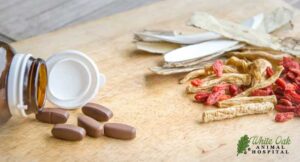
In my practice, I sometimes incorporate natural herbs and supplements alongside conventional treatments, because your dog may benefit more when we use the best of both approaches. It just depends on your dog’s individual situation.
You may have noticed a growing interest in natural options. That shift is happening for a reason. There is growing research supporting the use of certain natural herbs and nutraceuticals to help manage inflammation, support joint health, and improve overall comfort.
What I want you to understand is that this is not about choosing “natural” over “conventional.” It is about choosing what works best for your dog.
In many cases, natural therapies can be a great place to start. Especially for mild-to-moderate discomfort or long-term support. They tend to be gentler on the body and, when used appropriately, are often well tolerated. At the same time, there are situations where medications are necessary, and I do not hesitate to use them when your dog needs faster or stronger relief.
From an integrative perspective, the goal is balance. I look at how we can:
- Reduce inflammation safely
- Support joint and tissue health
- Minimize side effects over time
- Improve your dog’s overall quality of life
 When we combine targeted supplements, nutrition, and therapies like acupuncture with appropriate medical care, we can often help your dog feel better in a more complete and sustainable way.
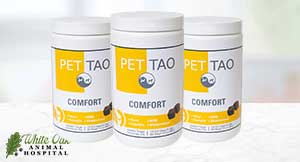
Ultimately, my goal is simple: to give your dog the most effective, safest path to staying comfortable, active, and happy. One of my top recommendations is PET | TAO Comfort. I’ll explain why and the main ingredients below.
Yucca
Yucca is natural herb containing compounds called saponins, which are where most of the benefits come from. From a pain management perspective, I look at yucca for its ability to support a healthy inflammatory response.
Inflammation is one of the primary drivers of pain in your dog, especially with joint issues, soft tissue strain, or everyday wear and tear. When inflammation is better controlled, your dog can move more easily and comfortably.
This is helpful for dogs who:
- Show stiffness after resting
- Hesitate to jump or climb stairs
- Have mild to moderate joint discomfort
- Seem sore after normal daily activity
Yucca also supports circulation and digestion. When your dog’s body circulates nutrients efficiently and absorbs what it needs, tissue repair and recovery can happen more effectively. That contributes to long-term comfort, not just short-term relief.
You may also notice an added benefit: reduced stool and urine odor. This is because yucca influences how certain waste byproducts are processed. While that is not directly related to pain, it is a sign that the digestive system is functioning more efficiently.
MSM
MSM, or methylsulfonylmethane, is a naturally occurring sulfur compound that plays an important role in joint and connective tissue health.
From a pain management perspective, MSM is valuable because it supports the structures that keep your dog moving comfortably. Structures such as ligaments, tendons, cartilage, and joint fluid. As your dog ages, levels of these supportive compounds can decline, contributing to stiffness and discomfort.
What I want you to understand is that MSM does not just mask pain. It helps reduce inflammation and support the integrity of connective tissue. When those tissues are healthier, your dog often experiences improved mobility and less discomfort during normal activity.
MSM greatly benefits dogs who:
- Show signs of joint stiffness or slowing down
- Have arthritis or age-related wear and tear
- Are recovering from soft tissue strain or injury
- Need ongoing joint support to stay active
There is also research suggesting MSM may help protect cartilage from breakdown, which is especially important in conditions like osteoarthritis. Supporting cartilage health can make a real difference in how your dog feels over time.
From an integrative perspective, I also consider MSM’s role in overall wellness. Sulfur is important for many biological processes, including tissue repair and maintaining healthy immune function. When your dog’s body has the building blocks it needs, healing and recovery tend to happen more efficiently.
As with any supplement, MSM works best as part of a comprehensive plan. I often combine it with other joint-supportive ingredients, proper nutrition, and therapies like acupuncture to help your dog stay comfortable, mobile, and active.
The goal is not just short-term relief, but helping your dog move better and feel better for the long term.
Boswellia
Boswellia, also known as Indian frankincense, is a well-studied plant used in traditional medicine for inflammation and joint support.
From a clinical perspective, Boswellia stands out for its active compounds, boswellic acids. Research also shows Boswellic acids help regulate inflammation by targeting specific pathways, including the 5-lipoxygenase (5-LOX) pathway, which plays a key role in inflammatory processes.
What that means for your dog is simple: when inflammation is better controlled, pain is often reduced, and movement becomes easier.
In practice, I use Boswellia for dogs who:
- Show stiffness or slowing down with age
- Have arthritis or joint degeneration
- Experience discomfort after normal activity
- Need long-term support without relying solely on medications
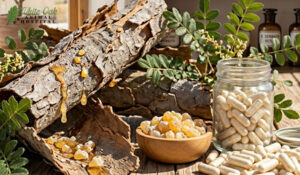
More recent research suggests Boswellia can help protect cartilage by reducing the breakdown of joint tissue and limiting inflammatory signals that contribute to degeneration. This is especially important in osteoarthritis, where both inflammation and cartilage loss drive discomfort.
Now, you may have heard comparisons between Boswellia and NSAIDs. While Boswellia can be very effective, I look at it differently. It is not about replacing medications in every case. It is about having another tool that can support your dog’s comfort, often with fewer long-term side effects when used appropriately.
From an integrative standpoint, Boswellia works best as part of a comprehensive plan, which is why I prefer PET | TAO Comfort.
The goal is to help your dog feel better without relying too heavily on any one approach. When used correctly, Boswellia can be a powerful way to support your dog’s comfort, movement, and quality of life over time.
Meadowsweet
Another herb great for easing pain is meadowsweet. You may hear it referred to as “herbal aspirin,” and there is a reason for that. But I want to explain it in a way that helps you understand how it actually works for your dog.
Meadowsweet naturally contains salicylate compounds, which are related to the same class of compounds that inspired the development of aspirin. However, in its whole plant form, meadowsweet tends to be gentler on the body when used appropriately.
From a pain management perspective, I look at meadowsweet for its ability to help regulate inflammation. It works, in part, by influencing prostaglandins. Prostaglandins are signaling compounds in your dog’s body that drive pain, inflammation, and swelling.
When prostaglandins are elevated, your dog may experience more discomfort, especially in the joints. By helping modulate that response, meadowsweet can support improved comfort and mobility.
Meadowsweet benefits dogs who:
- Have mild to moderate joint discomfort
- Show stiffness after rest or activity
- Need gentle, daily support for inflammation
- Benefit from a more natural approach alongside other therapies
Meadowsweet also contains antioxidant compounds, which help protect tissues from oxidative stress. This is important because ongoing inflammation and oxidative damage can contribute to long-term joint degeneration.
One thing I always emphasize is balance. While meadowsweet can be very helpful, it still acts on similar pathways as traditional anti-inflammatories. That means it should be used thoughtfully, especially if your dog is already on medications or has sensitivities.
That’s one of the reasons I prefer PET | TAO Comfort. It uses meadowsweet as part of a broader strategy to reduce inflammation, support tissue health, and improve your dog’s overall comfort.
The goal is to help your dog move more easily, feel better day to day, and maintain a good quality of life, without relying on a single approach alone.
How to Alleviate Your Pet’s Pain
Helping your dog feel better as they age is often easier than you might expect. Small, consistent changes can make a meaningful difference in your dog’s comfort and mobility.
In my experience, you do not always need to start with aggressive interventions. When you support your dog early and consistently, you can often help them stay active, comfortable, and engaged in daily life.
There are a few simple areas I encourage you to focus on:
- Add targeted herbal support to help manage inflammation and support mobility
- Feed a balanced, high-quality diet to support tissue health and reduce inflammatory burden
- Encourage gentle, consistent movement to maintain muscle strength and joint stability
 These steps may seem simple, but they work together in a powerful way. When your dog’s body is supported from multiple angles, you often see noticeable improvements in how they move and feel.
I have seen many dogs regain comfort and energy with the right combination of support. You may even notice your dog becoming more willing to move, play, and engage—sometimes sooner than you expect.
I often recommend a comprehensive supplement like PET | TAO Comfort. It combines multiple ingredients designed to help reduce inflammation, support joint health, and improve overall comfort during normal daily activity.
 From an integrative perspective, the goal is not just to reduce pain in the moment. It is to support your dog’s body in ways that promote long-term mobility, comfort, and quality of life.
When you take a proactive approach now, you give your dog the best chance of staying happy, active, and comfortable for years to come.
Schedule an Appointment or Telemedicine Consultation
References:
- Carbonare, L. D., Bertacco, J., Marchetto, G., Cheri, S., Deiana, M., Minoia, A., Tiso, N., Mottes, M., & Valenti, M. T. (2021). Methylsulfonylmethane enhances MSC chondrogenic commitment and promotes pre-osteoblasts formation. Stem Cell Research & Therapy, 12(1), 326. https://pmc.ncbi.nlm.nih.gov/articles/PMC8180127/
- Cheeke, P., Piacente, S., & Oleszek, W. (2006). Anti-inflammatory and anti-arthritic effects of yucca schidigera: A review. Journal of Inflammation, 3(1), 6. https://pmc.ncbi.nlm.nih.gov/articles/PMC1440857/
- Peng, C., Yang, Y., Wang, Y., Gong, B., Sun, X., & Yang, X. (2025). From bench to bedside, boswellic acids in anti-inflammatory therapy — mechanistic insights, bioavailability challenges, and optimization approaches. Frontiers in Pharmacology, 16, 1692443. https://pmc.ncbi.nlm.nih.gov/articles/PMC12669112/
- Shin, M., Kim, H., Choi, H., Park, K. S., Choi, H. J., & Roh, S. (2022). Boswellia serrata Extract, 5-Loxin®, Prevents Joint Pain and Cartilage Degeneration in a Rat Model of Osteoarthritis through Inhibition of Inflammatory Responses and Restoration of Matrix Homeostasis. Evidence-based Complementary and Alternative Medicine, 2022, 1–11. https://pmc.ncbi.nlm.nih.gov/articles/PMC9605825/