Hip dysplasia in dogs often starts long before pain becomes obvious, especially in large and giant breeds. Many owners assume stiffness or slower movement comes with age, but hip dysplasia in dogs follows a different path. Size changes how joints form, how stress loads the hip, and how fast damage accumulates. Large dogs grow quickly, carry more weight, and rely on joints that must stabilize before muscles fully catch up. That imbalance drives earlier breakdown and faster progression.
This article focuses on research rather than outdated assumptions. We look at why large breeds face higher risk, why symptoms show up late, and why waiting for limping often closes important treatment windows. We also explain how integrative care changes outcomes when applied early and consistently. At White Oak Animal Hospital, we combine diagnostics, movement-based strategies, and integrative therapies to slow decline rather than chase pain.
You will learn how growth patterns affect joint mechanics, the role genetics play, and how subtle symptoms get missed in big dogs. We also cover when to see us and how layered care plans support mobility and comfort across a dog’s lifespan.
Hip Dysplasia in Dogs and Why Large Breeds Break Down Faster
Hip dysplasia in dogs begins during development, not when a dog turns gray. In large breeds, bones lengthen rapidly while muscles, tendons, and ligaments lag behind. That timing gap creates joint looseness at a stage when cartilage still forms and adapts. Hip dysplasia in dogs becomes a mechanical issue early, long before inflammation or pain draws your attention.
Body mass magnifies every small instability. Each step places higher force across the hip socket, increasing shear stress at the joint surface. Research on large breeds shows that immature cartilage handles load poorly, which accelerates surface wear when the joint lacks tight congruency. Once laxity exists, the body responds by remodeling bone, a process that leads to early osteoarthritis.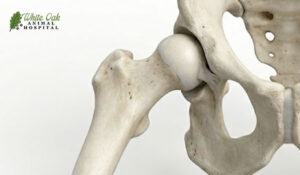
Owners often wait for clear signs of pain, but large dogs compensate well. They shift weight, shorten stride length, and reduce play intensity without obvious limping. By the time pain appears, structural changes often limit treatment options. Early imaging and movement assessment identify risk while joints still respond to support strategies. This approach aligns with Western Veterinary Medicine diagnostics while opening the door to integrative interventions that slow progression rather than react to damage.
Hip Dysplasia in Dogs Is Strongly Genetic in Large Breeds, but Environment Decides Severity
Hip dysplasia in dogs follows a polygenic inheritance pattern, meaning multiple genes act together to influence joint shape, laxity, and cartilage resilience. Large breeds carry higher genetic load, but genes do not dictate outcome. Hip dysplasia in dogs expresses differently based on growth rate, nutrition, and activity during early life.
Research reports heritability estimates that vary widely across breeds, which highlights the role of environment. Rapid growth fueled by excess calories increases joint stress during vulnerable phases. Inappropriate exercise patterns, such as repetitive high-impact activity on immature joints, worsen laxity. At the same time, studies show poor correlation between radiographic severity and pain levels. Some dogs show extensive joint changes with minimal discomfort, while others hurt early with modest structural change.
This disconnect matters clinically. Pain alone does not reflect joint health, and waiting for discomfort delays intervention. Early strategies focus on body condition, controlled movement, and joint support to reduce mechanical stress. Integrative planning pulls from nutrition, targeted supplements, and movement therapy to influence disease trajectory. This model mirrors concepts discussed in Current Research on Hip Dysplasia in Dogs while applying them in real-world clinical settings.
Hip Dysplasia in Dogs Progresses Quietly, Symptoms in Large Breeds Often Appear Too Late
Hip dysplasia in dogs often progresses without obvious pain, especially in larger bodies built to compensate. Owners may notice subtle changes first, such as reduced enthusiasm for stairs or shorter play sessions. Hip dysplasia in dogs hides behind adaptation, not dramatic limping.
As compensation continues, muscle mass shifts forward. Hind limb muscles weaken while shoulder muscles overdevelop. Gait changes like bunny hopping or delayed rising appear later, often after joint changes advance. Imaging frequently reveals degeneration before owners report discomfort, which supports early screening in at-risk breeds.
Studies confirm that pain perception does not track cleanly with structural damage. This reality explains why some dogs suddenly decline after years of appearing fine. Early veterinary evaluation focuses on movement analysis and imaging rather than waiting for pain-driven visits. Educational resources like Hip Dysplasia in Dogs help owners recognize early signals, but clinical assessment remains essential for timing intervention.
Integrative Treatment Approach for Large Dogs With Hip Dysplasia in Dogs
Hip dysplasia in dogs responds best to layered care that targets mechanics, inflammation, and movement quality. Western approaches establish diagnosis and manage pain, while integrative care addresses progression and function. Hip dysplasia in dogs in large breeds rarely improves with a single solution.
Radiographs establish joint status and guide planning. Weight management reduces load across the hip with measurable impact on mobility. Acupuncture supports neuromuscular balance and comfort by influencing pain signaling and muscle tension. Concepts rooted in Traditional Chinese Veterinary Medicine frame joint disease as a pattern involving circulation and tissue nourishment, which guides individualized therapy.
 Food therapy, herbs like Di Gu Pi San and targeted supplements support joint metabolism and inflammatory balance. Products like Harmonize Joint or Comfort fit into this structure as support tools, not stand-alone fixes. Controlled movement and rehabilitation stabilize joints and preserve muscle mass, improving daily function. Additional modalities fall under Alternative Treatments, which expand your options for dogs who cannot tolerate aggressive pharmaceutical plans.
This integrative model reflects principles discussed in The Holistic Approach To Treating Canine Hip Dysplasia & Joint Pain while adapting them to each dog’s size, age, and lifestyle.
Conclusion
Hip dysplasia in dogs places a heavier burden on large breeds because size amplifies every risk factor. Growth rate, body mass, and genetics interact to accelerate joint breakdown, often before pain alerts owners. Hip dysplasia in dogs demands early action rather than symptom chasing.
 At White Oak Animal Hospital, we use integrative care to change trajectories instead of reacting late. Our approach blends diagnostics, movement planning, acupuncture, nutrition, and targeted support into individualized care plans. We offer in-clinic evaluations and TCVM telemedicine consultations, backed by more than 28 years of experience.
If your large-breed dog shows subtle changes or belongs to a high-risk group, schedule a visit or telemedicine consult with Dr. Damron. Early guidance preserves mobility, comfort, and quality of life for years to come.
Frequently Asked Questions
When should large-breed dogs be screened for hip dysplasia in dogs?
Screening for hip dysplasia in dogs often starts during growth, especially for large breeds. Early imaging and movement assessment identify laxity before pain appears. Hip dysplasia in dogs benefits from proactive evaluation rather than waiting for limping or stiffness.
Can hip dysplasia in dogs be managed without surgery in large breeds?
Many cases of hip dysplasia in dogs respond well to non-surgical management when addressed early. Integrative plans that combine weight control, movement therapy, acupuncture, and joint support often slow progression and improve function. Hip dysplasia in dogs does not automatically require surgery.
Do joint supplements alone slow hip dysplasia in dogs?
Joint supplements help support cartilage and inflammation balance, but may not fully resolve hip dysplasia symptoms in your dog. Supplements work best as part of a broader plan that includes diagnostics, movement guidance, and integrative therapies. Hip dysplasia in dogs requires coordinated care.
Does exercise make hip dysplasia in dogs worse for large breeds?
Uncontrolled or high-impact exercise can worsen hip dysplasia in dogs, while structured movement improves stability and strength. The goal is controlled activity that supports joints without overload. Hip dysplasia in dogs responds best to guided exercise plans.
Is TCVM useful for dogs with advanced hip dysplasia?
TCVM plays a valuable role in advanced hip dysplasia in dogs by supporting comfort, circulation, and mobility. Even when structural change exists, integrative care improves daily function and quality of life. Hip dysplasia in dogs benefits from supportive care at every stage.
Related Posts
 How Melatonin for Dogs Promotes Relaxation
Just like people, dogs experience stress for a number of reasons. Some dogs feel nervous…
 Benefits of Spirulina Supplements For Dogs
s Will spirulina supplements benefit your dog? Well, just like people, sometimes pets experience dips…
 Why Herbal Treatment May Benefit Hypothyroidism In Dogs
Do you have personal experience with hypothyroidism in dogs? If a veterinarian has diagnosed your…
 Why Try Food Therapy For Dogs?
Have you heard of food therapy for dogs? PET | TAO, a premium holistic pet…