Cushing’s disease in dogs is a lifelong condition with no cure, only symptom management. It happens when the body produces too much cortisol, the stress hormone. Cortisol in normal amounts helps regulate metabolism and immune responses. In excess, it damages tissue and causes a range of chronic symptoms. Dogs with Cushing’s disease often develop a pot-bellied abdomen, drink and urinate excessively, have thin or fragile skin, lose hair, and experience recurring infections and fatigue. These changes slowly take away their comfort and quality of life.
In traditional Western veterinary medicine, the main goal is to control cortisol levels through drugs and ongoing monitoring. This can help, but it often involves side effects, high costs, and frequent testing. From a Traditional Chinese Veterinary Medicine perspective, Cushing’s disease is seen as an imbalance within the body. Treatment focuses on restoring harmony by supporting weak kidney and liver energy, nourishing Yin, and protecting Qi.
 At White Oak Animal Hospital, we combine both perspectives into an integrative care plan. We rely on the tools of Western veterinary medicine, the insights of Traditional Chinese Veterinary Medicine, and selected alternative treatments to give dogs the best chance at a stable and comfortable life. Lily’s case shows how this approach can restore energy and peace for a dog living with Cushing’s disease. Her family chose a telemedicine consultation with Dr. Casey Damron, and her improvement has been steady and meaningful.
Cushing’s Disease in Dogs: Symptoms, Challenges, and Hope With Integrative Care
Cushing’s disease is permanent. It cannot be cured but it can be managed. Many dogs live for years after diagnosis with proper care. The condition is often suspected when a dog develops a rounded abdomen that looks bloated, drinks water constantly, and needs to urinate more often than normal. Their skin becomes thin, and hair loss appears along the trunk or hindquarters. They may suffer from frequent skin infections or dark patches that do not heal quickly. Lethargy, panting, and slower recovery from wounds are common.
In conventional care, drugs such as trilostane or mitotane are prescribed to lower cortisol. These drugs help in many cases, but they carry risks. Frequent blood tests are required to monitor hormone levels, and some dogs develop vomiting, loss of appetite, or lethargy from the medication. For senior pets, this path can be stressful.
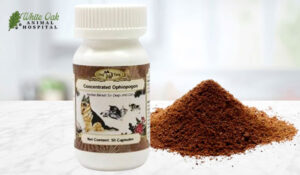 From a TCVM perspective, Cushing’s disease reflects deeper organ imbalance. Herbs are used to restore balance rather than simply suppress cortisol. Ophiopogon Formula is often chosen because it nourishes Yin, clears internal heat, and helps hydration. Rehmannia 11 supports Qi, nourishes Yin, and strengthens kidney energy. Together, these address the underlying patterns that lead to Cushing’s disease.
Integrative care resonates with many families because it combines targeted treatments with whole-body support. It focuses on extending comfort, reducing side effects, and supporting natural healing. At White Oak Animal Hospital, we often find that this approach gives pets more good days and helps families feel confident about their choices. Lily’s progress is a reminder of how integrative medicine offers hope where conventional paths alone may feel limited.
Cushing’s Disease Success Story: How Lily Regained Energy and Comfort
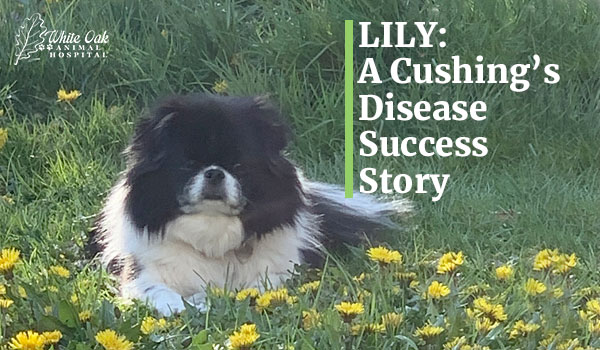
Lily is a senior dog who had been struggling with classic symptoms of Cushing’s disease. She was fatigued, restless, and had hair loss along her hindquarters. Her eyes appeared red, and she often paced at night instead of resting. Her family reached out for support and scheduled a telemedicine consultation with Dr. Damron. That appointment marked the start of a new plan that changed Lily’s daily life.
Her owner, Uriel, explained that the first step was adding melatonin and lignans. Within a week, Lily’s energy returned. She was less weak, her eyes became clear, and she began engaging with family life again. She rested more comfortably and seemed calmer. Uriel described how quickly her demeanor lifted once her body had support.
In late August, Dr. Damron added herbal formulas to her plan. The combination of Ophiopogon Formula and Rehmannia 11 further improved Lily’s strength. Muscle weakness episodes became less frequent, and her coat slowly began to regrow.
Food therapy was also introduced. Lily transitioned to a new diet and received PET | TAO Freeze Dried Beef Liver Treats. At first, preparing the food required effort, but Lily responded well. Her appetite grew, and she enjoyed mealtime again.
Uriel emphasized that while pharmaceutical treatment may have been less costly, the potential side effects and required testing were not acceptable for a senior dog. With this approach, Lily has improved without those risks. Her pacing has eased, her eyes are clear, and her energy is better than before. This Cushing’s disease success story highlights how integrative care can restore comfort, protect senior health, and create more peaceful days for both pets and families.
Dr. Damron’s Cushing’s Disease Protocol for Lily
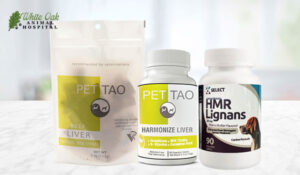 Lily’s plan was designed specifically for her needs through a White Oak Animal Hospital telemedicine consultation. Dr. Damron recommended a combination of herbs, supplements, food therapy, and organ support to target the effects of Cushing’s disease and strengthen her overall system.
The herbal prescriptions included Ophiopogon Formula and Rehmannia 11. Ophiopogon nourishes Yin and clears heat, which reduces symptoms linked to excess cortisol. Rehmannia 11 supports kidney energy and consolidates Yin, making it valuable for long-term balance.
Supplements were also part of the plan. K9 Select HMR Lignans help regulate hormone levels and lower cortisol naturally. Melatonin offers additional support by cooling the body, improving rest, and stabilizing hormone balance. PET | TAO Harmonize Liver provides detoxification and liver regeneration with milk thistle and synergistic herbs.
Food therapy was emphasized as well. Lily received PET | TAO Freeze Dried Beef Liver Treats, which nourish the liver and provide clean protein without additives. Her meals followed a low-fat, cooling protocol, aligned with TCVM food therapy for Cushing’s disease. This addressed hyperlipidemia, a common problem in affected dogs.
Organ support was another focus. Standard Process Canine Whole Body Support provided nutrients for all organ systems. Standard Process Adrenal Support was included to stabilize adrenal gland health.
This personalized plan balanced the strengths of Western veterinary medicine, TCVM, and alternative treatments. By addressing cortisol imbalance through multiple pathways, Lily regained strength and resilience. Her protocol demonstrates how telemedicine extends specialized care to families far from Fairview, Tennessee.
Conclusion
Cushing’s disease in dogs is permanent, but it does not mean a dog must live without comfort. Lily’s Cushing’s disease success story shows that integrative care can improve daily life without depending solely on pharmaceuticals. By combining herbs, supplements, food therapy, and organ support, she regained energy, slept better, and rejoined her family’s routines.
 At White Oak Animal Hospital, we have more than 28 years of experience in combining approaches. We provide Western veterinary medicine, Traditional Chinese Veterinary Medicine, and targeted alternative treatments to create custom care plans. Telemedicine makes it possible for families outside our area to access these services.
Our approach is built on balance. We use modern science to monitor and diagnose, while TCVM and holistic methods strengthen the body. Many families prefer this path because it offers fewer side effects and longer-term comfort.
 If your dog has been diagnosed with Cushing’s disease, know that options exist beyond conventional drugs. Relief is possible with a plan designed for your pet’s needs. We invite you to schedule a telemedicine consultation or an in-clinic appointment with White Oak Animal Hospital. Together, we can restore comfort and give your dog a better life with Cushing’s disease.
Frequently Asked Questions
What is the life expectancy of a dog with Cushing’s disease?
Most dogs live two to four years after diagnosis. With integrative care, many live longer and maintain more comfort. The focus is on slowing the disease and improving daily quality of life rather than extending time without health.
What foods help dogs with Cushing’s disease?
Low-fat diets are important for dogs with this condition. Cooling foods such as turkey, white fish, and vegetables are often part of TCVM nutritional therapy. Many families choose the PET | TAO Chill Formula (a cooling canned diet) or prepare slow-cooker meals at home. These approaches help reduce stress on the body and improve digestion.
Are herbs safe for dogs with Cushing’s disease?
Yes, when they are prescribed by a TCVM-trained veterinarian. Herbal formulas like Ophiopogon and Rehmannia 11 are used to nourish Yin, tonify Qi, and support kidney function. Because dosing must be precise, veterinary oversight is always required.
Can Cushing’s disease be managed without pharmaceuticals?
Yes. Many dogs do well with integrative care alone. Supplements such as melatonin and lignans, combined with herbal therapy and diet changes, can reduce symptoms. Families often select this option to avoid the risks of drug side effects and heavy monitoring.
How can I start a telemedicine consultation for my dog?
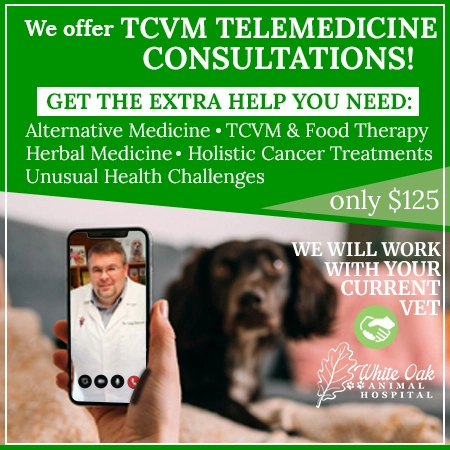
You can schedule a TCVM telemedicine consultation through White Oak Animal Hospital. During your appointment, Dr. Damron will review your dog’s symptoms and history. From there, you will receive a personalized plan that may include herbs, supplements, diet therapy, and supportive monitoring. This service extends advanced care to families outside of Tennessee and helps more pets live comfortably with Cushing’s disease.