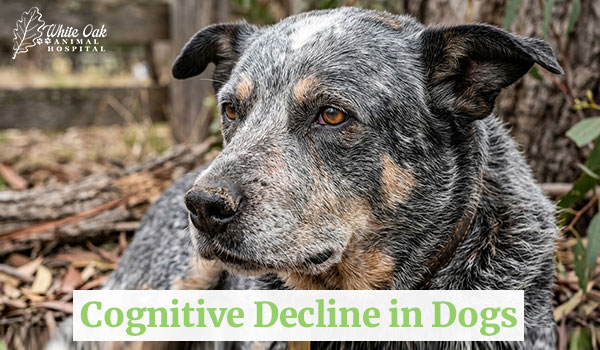
Cognitive decline in dogs shows up far more often than most owners expect, and we see it regularly in both senior dogs and middle aged dogs who still seem physically healthy at White Oak Animal Hospital. This condition does not arrive overnight. It develops quietly as the brain ages, adapts, and compensates until it no longer can. That slow pace explains why cognitive decline in dogs often gets brushed off as normal aging instead of a medical issue worth addressing.
Normal aging might mean a dog naps more or moves a bit slower. Cognitive decline changes how the brain processes information. Memory, awareness, and sleep cycles shift. Behavior changes follow. Most owners miss early signs because the dog still eats well, walks fine, and responds to familiar cues. The changes feel subtle at first.
 This article focuses on patterns we see clinically. We will walk through behavioral shifts, neurological changes, why timing matters, and how integrative care changes outcomes. The goal is practical guidance, not emotional reassurance. If your dog seems slightly off but not clearly sick, that gray area matters.
Early recognition gives you options. Late recognition limits them. That difference shapes how we approach care, especially when we combine Western Veterinary Medicine with Traditional Chinese Veterinary Medicine and targeted lifestyle support. Cognitive decline in dogs does not have to progress unchecked when you act early and take a broader view of brain health.
Cognitive Decline in Dogs Often Starts Long Before You Notice
Cognitive decline in dogs develops gradually because the brain adapts before it fails. Early on, neural pathways reroute around areas under stress. This compensation masks dysfunction and keeps daily routines intact. That survival mechanism works until inflammation, oxidative stress, and reduced circulation overwhelm it. By the time changes look obvious, the decline has already progressed, which is why cognitive decline in dogs rarely feels sudden.
Owners often mislabel early signs as personality shifts or age quirks. A dog who sleeps more during the day or hesitates in new settings does not look sick. Cognitive decline in dogs thrives in the gap between subtle change and clear dysfunction, where the brain struggles quietly while behavior still seems manageable.
 Sleep wake cycles tend to shift first as the brain loses efficiency in regulating circadian rhythm, leading to daytime napping and nighttime restlessness. Spatial awareness and memory processing weaken next, causing hesitation in familiar rooms and uncertainty at thresholds or corners. Adaptability drops as small changes in routine create confusion. Sensory integration declines as sight, sound, and movement stop working together smoothly, even when vision and hearing appear normal. Chronic inflammation and oxidative stress continue to damage neurons over time, particularly in dogs with metabolic strain, which is why early cognitive support options like Herbsmith Senior Dog Wisdom: Cognitive Support For Dogs are often discussed as part of a broader plan.
Waiting for obvious signs delays meaningful intervention. At later stages, care shifts toward symptom control instead of preservation. Early recognition allows support while the brain still retains flexibility. That timing shapes outcomes more than most owners realize.
Cognitive Decline in Dogs Creates Predictable Behavioral Red Flags
Cognitive decline in dogs often shows up through behavior before it appears on diagnostic tests. These changes reflect neurological stress rather than stubbornness, anxiety, or training issues. Treating behavior in isolation misses the underlying cause and allows cognitive decline in dogs to continue progressing beneath the surface.
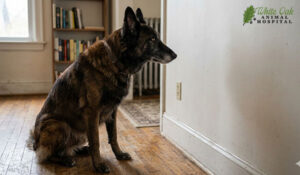 Disorientation in familiar environments is common, with dogs pausing in corners, staring at walls, or getting stuck behind furniture they have navigated for years. Social interaction often shifts, with some dogs becoming withdrawn while others grow overly attached, both patterns reflecting altered brain processing rather than mood alone. Learned routines begin to break down as house trained dogs forget signals or appear confused by cues they once followed easily.
Untriggered vocalization may appear, especially at night, as the brain struggles to regulate sleep cycles and awareness. Restlessness and pacing after dark often follow, driven by disrupted circadian rhythm rather than discomfort. Problem solving ability declines as dogs struggle with tasks they previously managed without effort, including navigating stairs or locating familiar objects. Behavioral medication alone often underperforms in these cases because it targets outward signs rather than neurological health, which is why addressing cognitive decline in dogs requires a broader clinical lens.
How Cognitive Decline in Dogs Is Evaluated and Managed Integratively
Cognitive decline in dogs responds poorly to single approach care because no single system drives the condition. Brain aging reflects metabolic health, circulation, inflammation, and neural signaling working together. An integrative assessment expands clarity and guides better decisions for dogs experiencing cognitive decline in dogs at any stage.
Western diagnostics play an important role by ruling out conditions that mimic cognitive changes. Blood work helps us evaluate thyroid balance, liver function, and systemic inflammation, while neurological exams help rule out structural disease. These steps matter, but they explain only part of the picture.
Traditional Chinese Veterinary Medicine adds another layer by evaluating how the entire body ages as a system. Pattern recognition considers circulation quality, inflammatory burden, and constitutional tendencies that standard tests often overlook. This perspective helps explain why some dogs decline faster than others despite similar test results.
 Treatment works best when multiple supports align. Acupuncture supports neuromodulation by influencing blood flow and neural signaling, which can help regulate sleep patterns and sensory processing. Herbal strategies focus on inflammation control and circulation support, with formulas selected based on the dog rather than the diagnosis alone, including products such as Animal Essentials Senior Support Herbal Tincture For Dogs And Cats. Food therapy and targeted nutrition reduce inflammatory load and support mitochondrial function within brain cells. Lifestyle adjustments and carefully selected Alternative Treatments help reduce cognitive strain and support daily function.
Early intervention focuses on slowing progression and preserving function. Late stage management shifts toward safety and comfort. Cognitive decline in dogs responds best when care begins before confusion becomes constant.
How we can help you
Cognitive decline in dogs remains manageable when addressed early and with a broad clinical perspective. Waiting for severe symptoms limits available options and narrows care toward damage control rather than support. Acting while changes remain subtle helps preserve function and quality of life.
 At White Oak Animal Hospital, we build integrative care plans around each dog instead of treating a diagnosis in isolation. We combine Western diagnostics with Traditional Chinese Veterinary Medicine to guide decisions that support the brain, the body, and daily function. Acupuncture, herbal medicine, food therapy, and alternative care strategies work together under one roof to address multiple drivers of decline at the same time.
We also offer TCVM telemedicine consultations to expand access when travel feels difficult or stressful. With over 28 years of experience treating complex and chronic conditions, our focus stays on practical outcomes and long term support.
If your dog shows subtle changes that feel hard to explain, trust that instinct. Early evaluation opens doors that close with time. Cognitive decline in dogs does not have to define the years ahead when care begins early and stays consistent.
Frequently Asked Questions
At what age does cognitive decline in dogs usually begin?
Cognitive decline in dogs does not follow a fixed age timeline. Some dogs show early changes in midlife, while others remain mentally sharp into their senior years. Breed tendencies, metabolic health, daily activity, and inflammatory load all influence timing. Age alone is a poor predictor.
Can cognitive decline in dogs be reversed or slowed?
Cognitive decline in dogs cannot be fully reversed, but progression can often be slowed when care begins early. Improvement usually means better daily function, steadier routines, and reduced confusion rather than a complete return to previous behavior.
How is cognitive decline in dogs different from anxiety or arthritis related behavior changes?
Cognitive decline in dogs overlaps with anxiety and pain related behaviors, which is why proper evaluation matters. Arthritis limits movement. Anxiety reacts to triggers. Cognitive decline affects awareness, memory, and processing, even when movement and environment stay the same.
Are supplements enough to manage cognitive decline in dogs?
Supplements alone rarely address the full picture. Cognitive decline in dogs reflects inflammation, circulation, and metabolic health. Supplements work best when paired with dietary changes, neurological support, and integrative veterinary care.
When should we seek veterinary help for cognitive decline in dogs?
Seek veterinary input when changes persist, worsen, or interfere with routine. Subtle signs count. Early consultation expands options and improves long term outcomes for dogs experiencing cognitive decline in dogs.
Related Posts
 5 Signs of Breast Cancer in Dogs You Shouldn't Ignore: Early Detection is Key
In the realm of canine health, one prevalent concern among pet owners is the specter…
 How Melatonin for Dogs Promotes Relaxation
Just like people, dogs experience stress for a number of reasons. Some dogs feel nervous…
 Benefits of Spirulina Supplements For Dogs
s Will spirulina supplements benefit your dog? Well, just like people, sometimes pets experience dips…
 Why Herbal Treatment May Benefit Hypothyroidism In Dogs
Do you have personal experience with hypothyroidism in dogs? If a veterinarian has diagnosed your…