When I talk with clients about Cushing’s disease in dogs, I often explain that it usually starts quietly. You may notice small changes, like your dog drinking more water, panting more than usual, or showing subtle shifts in behavior. These signs are easy to overlook. They are often mistaken for normal aging.
But over time, those changes begin to point to something deeper.
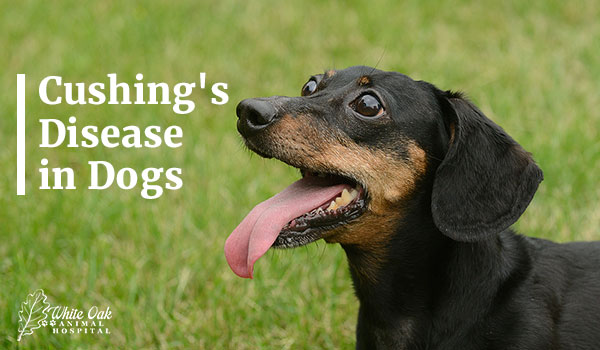
Cushing’s disease in dogs is a hormonal condition where the adrenal glands produce too much cortisol. Cortisol is a powerful stress hormone that affects nearly every system in your dog’s body. When it stays elevated, the body gradually loses its ability to maintain balance. As that imbalance builds, you may start to see changes in energy, immune function, muscle tone, and overall health.
I want you to understand that while there is no cure for Cushing’s disease in dogs, there is a lot we can do to support your dog. This is a lifelong condition, but with the right approach, many dogs can continue to live comfortably and enjoy a good quality of life.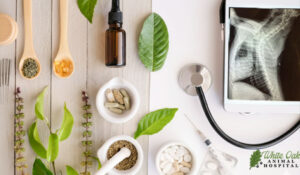
At White Oak Animal Hospital, I take an integrative approach to care. I combine Western diagnostics with Traditional Chinese Veterinary Medicine, along with targeted food therapy and supportive options tailored to your dog’s specific needs. Instead of focusing only on symptoms, I look at the underlying imbalance driving the condition.
My goal is simple: help your dog feel better, maintain balance, and continue to enjoy daily life for as long as possible.
Cushing’s Disease in Dogs: 4 Alarming Signs to Watch For
When I explain Cushing’s disease in dogs, I like to start with cortisol, because that is where everything begins. Cortisol is a hormone your dog’s body needs in the right balance. It plays an important role in regulating metabolism, blood sugar, immune function, and the body’s response to stress.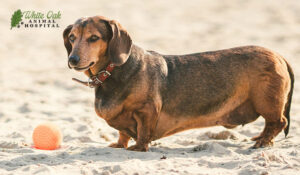
But when cortisol stays elevated over time, that balance is lost.
With Cushing’s disease, the body produces too much cortisol for too long. As a result, multiple systems begin to feel the strain. Organs, muscles, and tissues are all affected, often in ways that develop gradually.
What starts as a hormonal imbalance does not stay hidden forever. Over time, those internal changes begin to show up as physical signs you can recognize at home.
Cushing’s Disease Sign #1: A Rounded, Swollen Abdomen
One of the most recognizable signs of Cushing’s disease in dogs is a rounded, swollen abdomen. You may notice your dog developing what looks like a “pot-bellied” or “beer belly” appearance. At first glance, it can seem like simple weight gain. But that is not what is actually happening. With Cushing’s disease in dogs, elevated cortisol changes how the body stores fat and maintains muscle. Fat begins to redistribute toward the abdomen, while the abdominal muscles themselves gradually weaken. This combination creates that characteristic rounded shape. In many cases, I will also see muscle loss along the back and hind end at the same time. So while the belly looks fuller, the rest of the body may actually be losing strength and tone.
Cortisol also affects fluid balance and organ function. The liver can become enlarged, and connective tissues lose strength, which further contributes to the distended appearance.
From an integrative perspective, the above symptoms tell me the body is no longer regulating properly.
In TCVM terms, this often reflects a deeper imbalance involving energy flow, fluid metabolism, and internal heat. The body is no longer distributing resources efficiently, and that imbalance starts to show externally.
What I want you to understand is that this change does not happen overnight. It develops gradually, which is why it is often overlooked or attributed to aging. But when you see this type of abdominal change (especially alongside signs like increased thirst, panting, or skin issues) it becomes a very important clue. Recognizing this early allows us to step in sooner, support your dog’s system more effectively, and help slow the progression of Cushing’s disease.
Cushing’s Disease Sign #2: Persistent Panting
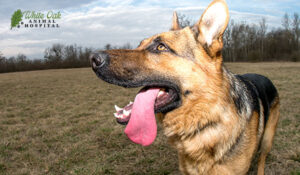
The second sign I pay close attention to with Cushing’s disease in dogs is persistent panting. You may notice your dog panting even when resting or in a non-warm environment. That is not typical, and I take it seriously.
With Cushing’s disease, elevated cortisol disrupts the body’s normal regulation. It affects how your dog manages temperature, stress, and respiratory patterns. As a result, your dog may breathe faster or work harder to regulate the body, even when there is no obvious reason to do so.
From an integrative perspective, I also examine how cortisol affects the nervous system and the overall stress response. When that system stays activated, it can keep your dog in a constant state of internal “overdrive,” which often shows up as ongoing panting.
If you are seeing this pattern, especially alongside other changes, it is an important signal that your dog’s body may be under stress.
Recognizing persistent panting early can help us identify Cushing’s disease in dogs sooner and begin supporting your dog before the condition progresses further.
Cushing’s Disease Sign #3: Increased Thirst and Urination
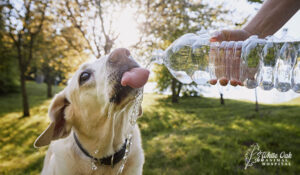
The third early sign I often see in dogs with Cushing’s disease is increased thirst and urination. You may notice your dog drinking more water than usual, emptying the bowl faster, or needing to go outside more frequently, even waking you up at night to urinate.
This is one of the earliest changes the body shows, but it is also among the most commonly overlooked. Many clients assume it is just part of aging or related to warmer weather.
In dogs with Cushing’s disease, elevated cortisol levels affect how the kidneys regulate fluid balance. It causes your dog to produce more urine, which then drives increased thirst as the body tries to compensate.
From an integrative perspective, I also look at how this reflects a loss of internal balance. Particularly, in how the body manages fluids and stress over time.
If you are noticing these changes, especially along with other subtle signs, it is worth paying attention. Catching increased thirst and urination early can help us identify Cushing’s disease in dogs sooner and give us more options to support your dog.
Cushing’s Disease Sign #4: Chronic Skin Problems
The fourth sign I watch closely for Cushing’s disease in dogs is ongoing skin problems.
You may notice your dog’s skin becoming thinner, more fragile, or more easily torn. Some dogs develop recurring infections, slow-healing wounds, or areas of darkened skin. These changes are not just surface issues. They are directly tied to the effects of elevated cortisol.
With Cushing’s disease, cortisol suppresses the immune system and interferes with normal skin repair. Over time, the body becomes less efficient at healing and more prone to irritation and infection.
From an integrative perspective, I also look at how circulation, immune balance, and inflammation are contributing to what you are seeing. When those systems are under strain, the skin often reflects it first.
If you are noticing persistent or recurring skin issues, especially alongside other changes, it is an important signal that something deeper may be going on.
If you want a deeper look at the conventional medical understanding of Cushing’s disease in dogs, I also recommend reviewing “Cushing’s Syndrome” through Cornell University College of Veterinary Medicine.
Typical Cushing’s Disease and Atypical Cushing’s Disease
When I evaluate Cushing’s disease in dogs, it is important to understand that not every case looks the same.
 There are typical and atypical forms, and both can produce very similar signs. The difference is that in atypical cases, standard bloodwork may not clearly confirm the diagnosis, even though the symptoms you are seeing are very real.
This is something I see in practice, which is why I do not rely on a single test.
To diagnose Cushing’s disease, we use specific tests designed to evaluate how your dog’s body is handling cortisol. The most common include the ACTH stimulation test and the low-dose dexamethasone suppression test. In some cases, I may also recommend an ultrasound to look at the adrenal glands and check for structural changes, such as tumors.
These tools are important, but they are only part of the picture.
At White Oak Animal Hospital, I use diagnostic testing alongside a full clinical evaluation. I look at your dog’s symptoms, patterns over time, and overall balance, not just whether a single test result is positive or negative. This is especially important for atypical cases, where lab results may not fully match what you are seeing at home.
From an integrative perspective, my goal is to use that information to guide a personalized plan. Whether you are considering conventional treatment, natural support, or a combination of both, I want to make sure the approach fits your dog’s individual needs.
Ultimately, we are not just treating a test result. We are supporting your dog.
How White Oak Treats Cushing’s Disease in Dogs With Integrative Care
When I treat Cushing’s disease in dogs, I want you to understand that it often requires more than a prescription alone. At White Oak Animal Hospital, we take a full-body, integrative approach. We start with a clear diagnosis using Western veterinary medicine, then build a long-term support plan using Traditional Chinese Veterinary Medicine, nutrition, and targeted therapies.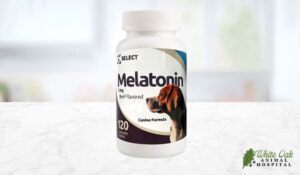
One of the first things I often incorporate is melatonin. Melatonin can help regulate hormonal patterns, support more restful sleep, and, from a TCVM perspective, help balance internal heat. I usually pair it with lignans to create a simple, at-home protocol that supports hormonal balance.
Liver support is another key priority. In dogs with Cushing’s disease, the liver is often under increased strain due to elevated cortisol levels. That is why I frequently recommend support like PET | TAO Harmonize Liver. It contains ingredients such as milk thistle and other herbs that help protect liver cells and support detoxification. Supporting the liver is not optional; it is critical to helping your dog maintain balance.
I also use nutrition strategically. Freeze-dried organ treats can play a supportive role by providing targeted nutrients from organs such as the liver, kidney, spleen, and lungs. In TCVM, we use the principle of “like supports like,” meaning these foods can help nourish the corresponding systems in your dog’s body. We can also show you how to home-cook an energetically-appropriate diet.
If tumors are part of your dog’s condition (whether adrenal or pituitary), I may incorporate specific herbal formulas designed to support circulation and reduce stagnation. One example is Stasis Breaker, which I use carefully based on your dog’s individual presentation.
This brings me to the most important point: personalization. No two cases of Cushing’s disease in dogs are exactly the same. Using TCVM, I assess your dog’s unique pattern by examining symptoms, behavior, the tongue, pulse, and overall presentation. Based on that, I may select specific herbal formulas such as Rehmannia 14 or Zhi Bai Di Huang Wan. I do not rely on lab values alone. I combine objective data with a deeper evaluation of how your dog is functioning as a whole. For ongoing care, I also offer TCVM telemedicine consultations. This allows me to monitor your dog’s progress, make adjustments over time, and support long-term stability without unnecessary stress.
My goal is simple: support your dog’s body, improve comfort, and help maintain quality of life, no matter where you are in the journey with Cushing’s disease in dogs.
Best Diet for Dogs With Cushing’s: What to Feed and Why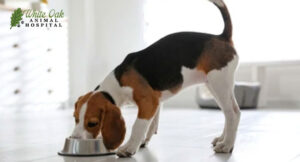
When treating Cushing’s disease in dogs, nutrition becomes one of the most important tools we have. Many dogs with Cushing’s develop elevated blood fat levels, which we call hyperlipidemia. These places added strain on the liver and pancreas and can make it harder for the body to maintain balance. That is why I often recommend a lower-fat, highly digestible diet to help reduce that burden.
But from an integrative perspective, it is not just about lowering fat. It is about choosing foods that support the body as a whole.
I frequently incorporate TCVM food therapy, including options from PET | TAO. These programs use home-cooked recipes designed for different stages of disease, with ingredients selected for their energetically cooling properties.
That matters because, in TCVM, Cushing’s disease in dogs is often associated with excess internal heat driven by elevated cortisol. Cooling foods help restore balance and reduce that internal strain.
If cooking is not practical for you, there are also convenient options, such as PET | TAO Chill. This canned diet contains cooling ingredients that can help reduce inflammation, support digestion, and improve the quality of the skin and coat.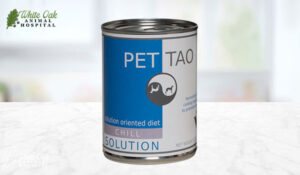
One thing I always emphasize is that food works best as part of a larger plan. When we combine the right diet with herbal support, such as liver support formulas or TCVM herbs, the body often responds more effectively. Nutrition helps lay the foundation, allowing other therapies to work more effectively.
In TCVM, food is medicine. I consider protein quality, fat content, moisture, and energy properties when building your dog’s plan. As your dog’s condition changes, we adjust the diet to match those needs.
If you are not sure where to start, you do not have to figure it out on your own. I offer personalized guidance to help you create a food therapy plan tailored to your dog. You can reach out to White Oak Animal Hospital or schedule a telemedicine consultation to build a plan that supports your dog’s comfort and long-term health with Cushing’s disease.
Conclusion
Cushing’s disease in dogs will not go away, but that doesn’t mean your dog can’t live well. With the right support, many dogs continue to enjoy a good quality of life for years. I have seen dogs regain energy, rest more comfortably, and move through their day with less strain. The key is having a plan that looks beyond lab values and focuses on your dog as a whole.
At White Oak Animal Hospital, we take an integrative approach to care. With over 28 years of experience, I combine Western diagnostics with Traditional Chinese Veterinary Medicine tools, including herbal therapy, food therapy, acupuncture, and targeted supplementation. This gives us more options and more ways to support your dog effectively.
I also understand that every client comes in with different goals. Some prefer to start with more natural approaches. Others are dealing with atypical cases where lab results do not fully explain what they are seeing. In both situations, my goal is to help you sort through your options and build a plan that fits your dog’s needs.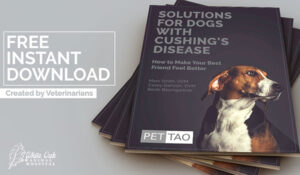
You do not have to navigate this alone. If you need guidance, whether it is help with nutrition, choosing the right herbal support, or building a complete plan, I am here to help. I also offer telemedicine consultations, so we can support your dog consistently without unnecessary stress.
We have also created a free ebook, written by myself and Dr. Marc Smith, to help you better understand how to support your dog through Cushing’s disease in dogs.
What I want you to take away is this: Cushing’s disease in dogs is not the end. It is a signal that your dog needs the right kind of support—and that is exactly what we are here to provide.
Frequently Asked Questions
Can Cushing’s disease in dogs be managed without drugs?
In many cases, yes. When I work with Cushing’s disease in dogs, I often start by looking at how we can support the body naturally, especially in mild or early cases. Tools such as melatonin and lignans can help regulate cortisol patterns, and I frequently incorporate TCVM food therapy and herbal support into the plan. That said, not every dog is the same. Some dogs do need medication, and I do not hesitate to use it when appropriate. My goal is to choose the approach that best supports your dog, whether that is natural support, conventional treatment, or a combination of both.
Is atypical Cushing’s disease in dogs treated the same way?
From an integrative perspective, yes. In dogs with Cushing’s disease, I treat the patient, not just the test results. Atypical cases may not always show up clearly on bloodwork, but the symptoms are still real and still need to be addressed. That is why I base treatment on your dog’s overall presentation, including behavior, physical changes, and TCVM patterns. The same tools (herbs, nutrition, and supportive therapies) can be used to help restore balance in both typical and atypical cases.
Can I use TCVM herbs without a prescription?
TCVM herbs require a veterinarian’s authorization. Herbal formulas for Cushing’s disease in dogs are not one-size-fits-all. In TCVM, each formula is selected based on your dog’s specific pattern. Using the wrong formula may not help and, in some cases, can worsen symptoms. That is why these herbs require veterinary guidance. My role is to match the right formula to your dog’s needs and adjust it over time as those needs change.
How fast will my dog improve on a natural Cushing’s protocol?
Every dog responds a little differently, but I often see early changes within a few weeks. With Cushing’s disease in dogs, you may notice improvements in energy, digestion, coat quality, or overall comfort within two to six weeks. More significant changes tend to build over time with consistent support. What I want you to understand is that this is a long-term condition. Steady, ongoing care is what creates the best results. Small improvements add up,and over time, they can make a meaningful difference in your dog’s quality of life.
Sources:
- Cushing’s syndrome. (n.d.). Cornell University College of Veterinary Medicine. https://www.vet.cornell.edu/departments-centers-and-institutes/riney-canine-health-center/canine-health-information/cushings-syndrome